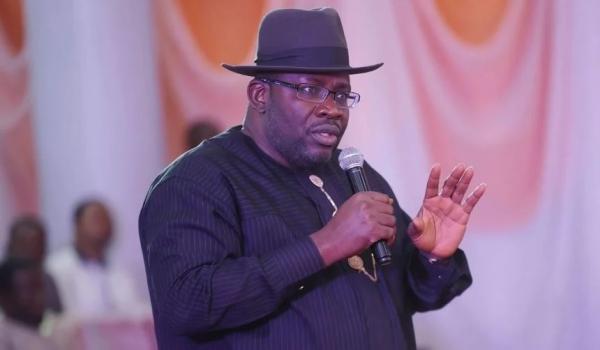



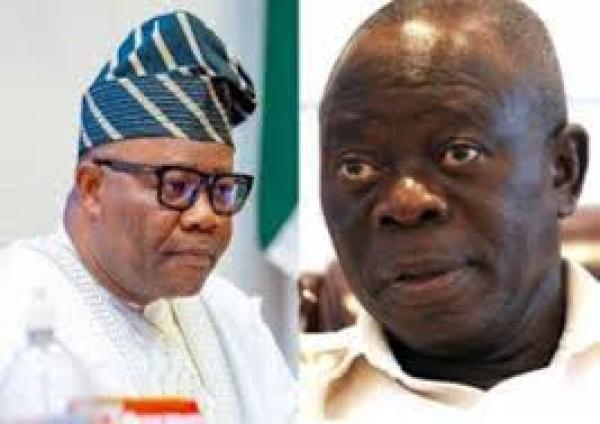
A mild drama unfolded in the Senate on Wednesday as Adams Oshiomhole clashed with Senate President Godswill Akpabio, less than 24 hours after lawmakers amended the chamber’s standing rules to tighten eligibility for presiding offices.
According to reports, the tension began during the reading of the Votes and Proceedings from Tuesday’s sitting, a routine exercise that briefly stalled plenary for about 10 minutes. Oshiomhole raised a point of order, but Akpabio ruled him out, noting that such interventions are not permitted at that stage under the Senate Standing Orders 2023, as amended.
When Oshiomhole persisted, Akpabio invited former Chief Whip, Orji Uzor Kalu, to clarify the rule. Kalu affirmed that points of order cannot be entertained during consideration of the Votes and Proceedings. Despite this, Oshiomhole continued to press his objection.
The situation prompted Senate Chief Whip, Tahir Monguno, to caution Oshiomhole against further disruption, warning that disciplinary measures could be applied. Akpabio subsequently resumed proceedings, directing lawmakers to specific pages of the document and urging them to familiarise themselves with Senate rules.
“We should not just go home, buy forms and come here without knowing the rules,” Akpabio remarked, before issuing a stern warning to Oshiomhole against further disorderly conduct. He added that the Senate would not hesitate to invoke its rules to maintain order.
Normal proceedings later resumed, with Adamu Aliero moving a motion for the adoption of the Votes and Proceedings, seconded by Senate Minority Leader Abba Moro.
The confrontation is believed to be connected to the Senate’s recent amendment of its Standing Rules. Following a closed-door session, lawmakers revised Orders 4 and 5, introducing stricter criteria for leadership positions in the 11th Senate.
Under the amended provisions, only senators who have served at least two consecutive terms immediately prior to nomination are eligible to contest for presiding offices. The rules also mandate that nominations must follow a ranking order, prioritising former presiding officers and ranking lawmakers. Similarly, eligibility for principal offices is now limited to senators with at least two consecutive terms.
The changes effectively exclude first-term senators, including Oshiomhole, from contesting for key leadership positions, a development widely seen as a source of the tension witnessed during Wednesday’s plenary.