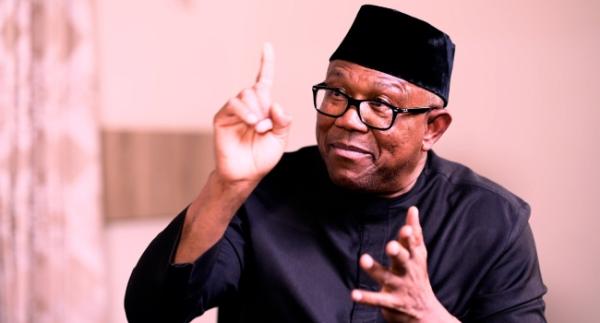



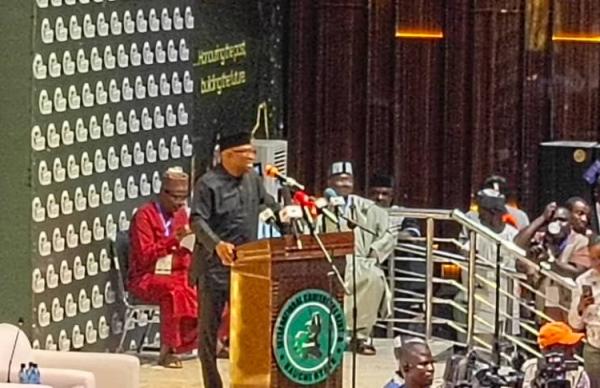
The 2027 presidential candidate of the Nigeria Democratic Congress (NDC), Peter Obi, has called on Nigerians to reject the culture of bad governance, injustice and political manipulation, warning that the consequences of decisions being taken today could affect future generations.
Obi, a former governor of Anambra State, made the call in his goodwill message at the Goodluck Jonathan Foundation (GJF) Democracy Dialogue 2026, held at the Ahmadu Bello International Conference Centre (ICC), Bauchi, on Tuesday.
The dialogue, themed, “Beyond Elections: Can Political Parties And The Judiciary Save African Democracy”, brought together political leaders, policymakers, jurists, civil society organisations, development partners and other stakeholders to deliberate on the state of democracy in Africa.
Obi said Nigerians must begin to ask critical questions about the direction of the country and work collectively to reverse the negative trends affecting the nation.
According to him, Nigeria has the potential to become a better and more prosperous country if citizens unite and demand accountability from those entrusted with political leadership.
He lamented what he described as the increasing erosion of democratic values and the failure of political leaders to prioritise the interests and welfare of ordinary Nigerians.
Obi said the country must move away from a system where political power is used to advance personal interests rather than serve the people.
He urged Nigerians to participate actively in the democratic process, stressing that citizens must understand what is happening in the country and hold leaders accountable through elections and other constitutional means.
The former governor expressed concern over the challenges confronting Nigeria, including insecurity, economic hardship, poverty and declining public confidence in government institutions.
He called on political leaders and citizens to put aside personal interests and work towards rebuilding the country.
Obi stressed the need for Nigeria to urgently reverse its present course, saying decisions being taken today would ultimately determine the kind of country future generations would inherit.
He therefore called for renewed commitment to democracy, good governance, justice, accountability and national development, urging Nigerians to act now to secure a better future for their children.
Earlier, the executive director of the Goodluck Jonathan Foundation, Ms. Ann Iyonu, said the GJF Democracy Dialogue had become one of Africa’s premier platforms for fostering high-level discussions on democratic governance, constitutionalism, peacebuilding, leadership and political transitions.
She said the dialogue had, since its inception, brought together current and former heads of state and government, policymakers, jurists, political leaders, development partners, civil society organisations, scholars and other stakeholders to examine the evolving state of democracy in Africa and identify practical pathways for strengthening democratic institutions and promoting sustainable governance.
Iyonu said each edition of the dialogue had sought to address some of the most pressing democratic questions confronting the continent.
She noted that although elections had become increasingly regular, competitive and widely accepted across Africa as the legitimate means of choosing political leaders, many countries continued to experience democratic fragility.
According to her, the challenges include political polarisation, disputed electoral outcomes, weak institutions, judicial controversies, declining public confidence in political parties, shrinking civic space, unconstitutional changes of government and growing citizen disillusionment with democratic governance.
“These realities suggest that the challenge confronting African democracies is no longer merely how to conduct credible elections, but how to build resilient institutions capable of sustaining democracy between elections,” she said.
Iyonu described political parties as the principal vehicles through which citizens organise political participation, articulate policy alternatives, recruit and prepare leaders, and aggregate public interests.
She said the judiciary, on the other hand, serves as the guardian of constitutional order, the rule of law, fundamental rights and electoral justice.
“Together, these institutions shape the credibility, legitimacy and resilience of democratic governance. Where political parties fail to uphold democratic values or where judicial independence is weakened, public confidence in democracy itself is undermined,”she said.
She, however, noted that both institutions faced significant challenges across much of Africa.
According to her, political parties are frequently criticised for weak internal democracy, personality-driven politics, ideological inconsistency, limited inclusion of women and young people, and an excessive focus on winning elections rather than governing effectively.
She added that the judiciary was increasingly finding itself at the centre of political contestation by resolving electoral disputes, interpreting constitutional questions and safeguarding democratic norms amid growing public scrutiny and concerns over judicial independence and institutional credibility.
Iyonu said this year’s dialogue sought to move the conversation beyond the mechanics of elections to examine whether Africa’s democratic future depended on strengthening the institutions that sustain constitutional governance, accountability and public trust.
She said the dialogue would bring together political leaders, judicial officers, election management bodies, policymakers, development partners, civil society organisations, academics and governance practitioners from across the continent to reflect on reforms needed to strengthen democratic institutions and advance democratic renewal in Africa.