


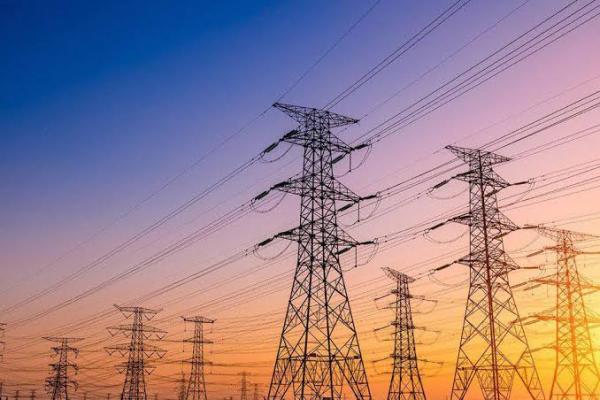
The Federal Government has approved plans to develop new Eastern and Western electricity grids to tackle Nigeria’s recurring national grid collapses and strengthen the country’s power transmission network.
The Minister of Power, Joseph Tegbe, disclosed this at a recent HBSAN energy conference in Lagos, where he outlined measures being considered by the government to address persistent challenges in the electricity sector.
Tegbe said the government was preparing to begin the procurement process for the projects, expressing optimism that their benefits would become evident within two to three years.
He explained that the government had divided the country into three energy zones to identify areas requiring urgent attention, stressing that improving electricity supply along the Lagos and Abuja corridors would address a substantial portion of the country’s power challenges.
“We have clustered Nigeria into three energy zones. The first one is the one that demands 50 per cent. If you fix Lagos and you fix the Abuja corridors, you’ve solved more than half of the problem of Nigeria. Because you can’t do that alone based on operational efficiency, you also have to build out your grid,” he said.
According to the minister, President Bola Tinubu has approved the commencement of the process to develop the Eastern and Western grids, with procurement activities expected to pave the way for the projects.
“The President has approved that we commence the process of building out the grid: East and Western grid. We’re going through the procurement process, but it’s something you’ll see the benefits in two to three years,” Tegbe stated.
He further disclosed that the Federal Government had commenced a nationwide technical audit of electricity infrastructure to establish the nature and extent of faults affecting the transmission network.
The exercise, he said, would enable the government to identify defective facilities and determine whether specific locations require repairs, upgrades or complete replacement of equipment.
Tegbe emphasised that the audit was necessary to ensure that government interventions addressed the actual causes of transmission failures instead of committing resources to the wrong infrastructure.
“We have started a technical audit across the entire country to say where do we have issues, and what issues specifically do we have. I don’t want to fix transformer issues where I have conductor and relay problems. I don’t want to fix insulators where the challenges I actually have are towers,” he said.
He added that the exercise would be completed within the next few weeks, after which the government would identify priority areas for intervention.
The minister also linked the persistent challenges in the transmission network to the age of some electricity facilities, noting that several towers and transmission lines had been in existence for decades.
According to him, some of the infrastructure dates back to the era of the Electricity Corporation of Nigeria (ECN), which preceded the National Electric Power Authority (NEPA).
“This government has inherited a problem of 50 years. Before I became the Minister of Power, honestly, I used to think that everybody in the power sector just didn’t know their left from right. But the reality is, some of the towers have gone down with some of the transmission lines there,” he said.
Recalling his visit to some transmission sites, Tegbe said he observed facilities bearing the ECN logo, underscoring the age of infrastructure still supporting electricity transmission in the country.
“When I went to the site, I saw some of them carrying the logo of ECN. Many people in this room might not know what ECN is. ECN predated NEPA. So, some of these things were built 50 years ago. That is the reality,” he added.
The planned grid development, alongside the nationwide technical audit, is expected to guide efforts to modernise ageing transmission infrastructure, address system weaknesses and improve the reliability of electricity supply across the country.