


The Federal Government has announced plans to develop “smart, durable and economically impactful” road infrastructure, following approval for a ₦150 billion extension of the Bodo–Bonny Road project in Rivers State under a Public-Private Partnership (PPP) arrangement.
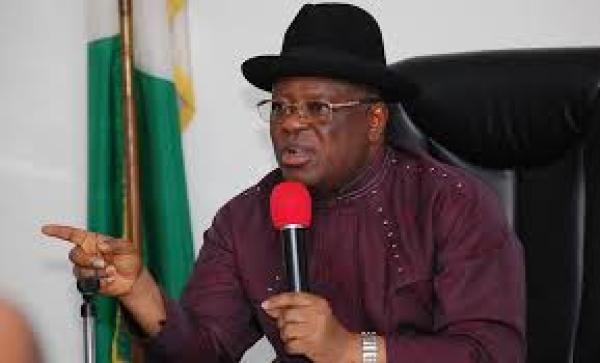
Minister of Works, David Umahi, disclosed the development during a meeting with the management of Nigeria LNG Limited, noting that the initiative represents a shift from conventional road construction to technology-driven, long-lasting infrastructure.
According to a statement issued by the ministry’s Director of Information and Public Relations, Mohammed Ahmed, the project has received presidential approval and will be presented to the Federal Executive Council for ratification.
Umahi said the road extension would be constructed using reinforced concrete technology with an expected lifespan of 50 to 100 years, aimed at reducing long-term maintenance costs.
He added that the administration of Bola Ahmed Tinubu remains committed to transparency and due process in the execution of major infrastructure projects.
Beyond the extension, the minister outlined a broader plan to transform Nigeria’s highways into smart economic corridors by integrating digital monitoring systems, safety features, and environmentally sustainable elements.
These include the installation of solar-powered street lighting and large-scale tree planting along major road networks to improve visibility, enhance security, and support economic activities in adjoining communities.
Umahi also revealed plans to deploy Closed-Circuit Television (CCTV) cameras along key highways, supported by strategically located monitoring centres to improve surveillance and emergency response times.
The project design will further incorporate rest areas, service stations, and operational hubs to strengthen maintenance and monitoring capabilities. In addition, truck parking facilities are to be integrated into the corridor to ease congestion and improve logistics, with ongoing consultations to secure land from host communities.
The minister stated that contractors have been directed to reinvest cost savings into value-added features such as solar lighting and landscaping.
He emphasised that the government has set a 12-month completion timeline for the project, alongside measures to prevent cost overruns and ensure accountability.
The Bodo–Bonny Road has long been regarded as a critical infrastructure project, linking Bonny Island—home to key oil and gas assets, including NLNG—to the mainland. Historically, limited road access has constrained economic activities in the area, with transportation largely dependent on waterways.
The planned upgrade, combined with smart infrastructure components, reflects a broader policy direction towards integrated transport systems designed to enhance durability, safety, and economic efficiency.
The government’s renewed focus on PPPs is also seen as part of efforts to address Nigeria’s infrastructure deficit by leveraging private sector funding and expertise.
Meanwhile, NLNG Managing Director, Adeleye Falade, highlighted the company’s commitment to innovation and cleaner energy, presenting a model of a compressed natural gas-powered vessel as part of ongoing efforts to promote low-carbon solutions in Nigeria’s transport and maritime sectors.
Discussions at the meeting also explored potential collaboration between the government and NLNG in advancing sustainable infrastructure development.