


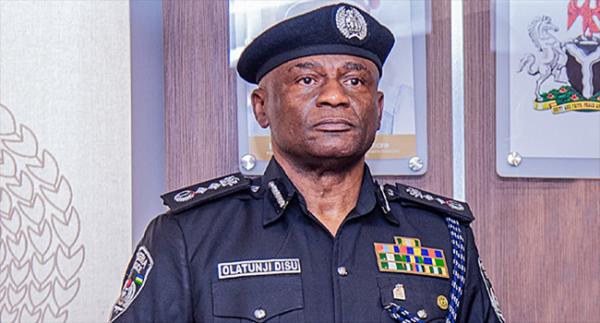
The Inspector-General of Police, Olatunji Disu, has said Nigeria’s current policing infrastructure is inadequate to effectively secure the country’s population of over 200 million people.
Speaking at the Infrastructure Dialogue 2026 held in Abuja, the police chief called for a significant expansion of security facilities across the country, revealing that the Nigeria Police Force currently operates only about 2,000 police stations nationwide.
“As of today, we have only about 2,000 police stations nationwide. These deficits directly affect operational effectiveness and must be addressed through sustainable financing models,” Disu said.
The IGP disclosed that the Infrastructure Concession Regulatory Commission had identified the need for an additional 3,000 police stations, 1,000 prisons, and 170 barracks to strengthen the nation’s security architecture.
He noted that the shortage of facilities, coupled with deteriorating infrastructure and outdated operational systems, continues to hamper the effectiveness of the police force.
According to him, Nigeria still faces persistent threats to critical infrastructure, including vandalism, sabotage, extortion, and disruptions orchestrated by organised criminal networks.
“Our mandate encompasses the creation of a stable and predictable environment in which legitimate enterprise can flourish,” the IGP stated.
Also speaking at the event, Nasarawa State Governor Abdullahi Sule acknowledged the scale of the infrastructure deficit but stressed that the challenge extends beyond funding alone.
“When we begin to talk about infrastructure, what most people think of are bridges, power, schools and maybe water. People don’t understand that infrastructure goes beyond that,” Sule said.
Former Adamawa State Governor Boni Haruna attributed part of the country’s infrastructure crisis to weak institutional credibility and poor enforcement of contractual agreements.
“When we want to win the confidence of investors, our courts and arbitration must be respected. Nigeria’s infrastructure gap is not just a financing gap; it is also a credibility gap,” Haruna said.